310-324-6611
GVJCI
  • Seniors
    • Bento Program
    • Smartphone/Tablet Class
    • Tomo No Kai Membership & Classes
    • Tomo Cafe | 友カフェ
    • Meditation & More Class
  • Events/Programs
    • Japanese Language School >
      • JLS Graduates
    • Upcoming Programs & Classes
    • TANOSHII Fun Camp >
      • Camper Registration
      • Counselor Registration
      • Activities
      • Testimonials
      • Camp Supporters
      • FAQ
      • Gaman Experience 2025
    • Car Show 2026
    • Showa Alley 2026
    • GVJCI Scholarships
    • Day Of Remembrance >
      • DOR 2026
    • The Bridge: GVJCI Heritage Center
    • Past Events >
      • Elemental Funk Concert
      • Car Show Pinewood Derby 2025
      • Izakaya 2026
      • Matsuri 2026
  • Organizations
    • Aikido
    • Boy Scout Troop 683
    • Boy Scout Troop 719
    • Dai Ichi Bonsai Kai
    • Evening Optimist Club of Gardena
    • Gardena JCI Kendo
    • Gardena Judo Club
    • Gardena Kendo
    • Gardena Naginata
    • Ikebana Class
    • LA Men's Glee Club
    • Luna Sol Yoga
    • Meito Calligraphy
    • Na Pua O Kapo
    • Ryukyukoku Matsuri Daiko LA
    • Sansei Baseball League
    • South Bay F.O.R Junior Sports Association
    • South Bay API Rainbow Connections
    • South Bay Youth Basketball
    • Southern CA Kyudo Renmei
    • Yuujou Taiko
  • Support Us
    • Donate
    • Become a Bento Buddy
    • Become a Friend of the GVJCI
    • 2026 GVJCI Raffle Drawing & Year End Appeal
    • Donate Your Car
    • Shop on Amazon
    • Volunteer
    • Purchase a 2027 Calendar Ad
  • Reserve our Facilities
  • About
    • About Us
    • Board and Staff
    • Careers
    • Contact Us
    • Resources & Newsletters
    • Testimonies/PR
    • Blog >
      • Blog Terms of Use
      • Want to write for us?
  • Seniors
    • Bento Program
    • Smartphone/Tablet Class
    • Tomo No Kai Membership & Classes
    • Tomo Cafe | 友カフェ
    • Meditation & More Class
  • Events/Programs
    • Japanese Language School >
      • JLS Graduates
    • Upcoming Programs & Classes
    • TANOSHII Fun Camp >
      • Camper Registration
      • Counselor Registration
      • Activities
      • Testimonials
      • Camp Supporters
      • FAQ
      • Gaman Experience 2025
    • Car Show 2026
    • Showa Alley 2026
    • GVJCI Scholarships
    • Day Of Remembrance >
      • DOR 2026
    • The Bridge: GVJCI Heritage Center
    • Past Events >
      • Elemental Funk Concert
      • Car Show Pinewood Derby 2025
      • Izakaya 2026
      • Matsuri 2026
  • Organizations
    • Aikido
    • Boy Scout Troop 683
    • Boy Scout Troop 719
    • Dai Ichi Bonsai Kai
    • Evening Optimist Club of Gardena
    • Gardena JCI Kendo
    • Gardena Judo Club
    • Gardena Kendo
    • Gardena Naginata
    • Ikebana Class
    • LA Men's Glee Club
    • Luna Sol Yoga
    • Meito Calligraphy
    • Na Pua O Kapo
    • Ryukyukoku Matsuri Daiko LA
    • Sansei Baseball League
    • South Bay F.O.R Junior Sports Association
    • South Bay API Rainbow Connections
    • South Bay Youth Basketball
    • Southern CA Kyudo Renmei
    • Yuujou Taiko
  • Support Us
    • Donate
    • Become a Bento Buddy
    • Become a Friend of the GVJCI
    • 2026 GVJCI Raffle Drawing & Year End Appeal
    • Donate Your Car
    • Shop on Amazon
    • Volunteer
    • Purchase a 2027 Calendar Ad
  • Reserve our Facilities
  • About
    • About Us
    • Board and Staff
    • Careers
    • Contact Us
    • Resources & Newsletters
    • Testimonies/PR
    • Blog >
      • Blog Terms of Use
      • Want to write for us?

GVJCI Blog
ガーデナ平原日本文化会館ブログ

An Adult Learns Japanese - Part 1

2/12/2021

2 Comments

 
By: Scott Maccarone, Community Guest Contributor
Duolingo, Babel, The Pimseuler Method, Rosetta Stone.....the list goes on. All of these apps and programs are marketed as ways to help people learn languages ‘more quickly, efficiently, and with better memory retention’. Duolingo is an app attempting to “game-ify” language learning at no cost to the user, while Rosetta Stone can cost as much as a downpayment on a car. I have tried some of these apps and methods, but to limited success. Deep down we all know why the programs and apps and gimmicks and “hacks” don’t work-- because there is no shortcut to learning Japanese. Learning Japanese takes effort every day to read, listen, write, and speak; it takes a community of peers to build an encouraging support system; it takes cultural awareness to understand not only what speech to employ but the corresponding behaviors and gestures; and it takes passionate teachers to correct and guide students along their path. Welcome to the Gardena Valley Japanese Cultural Institute (GVJCI)! 

I was introduced to the Japanese language and culture through martial arts. I was small, timid, and not particularly athletic as a youth, and surrounded by plenty of big, strong, boisterous farmers and cowboys where I grew up in my rural community. Martial arts magazines and books became a fascination of mine owing to the idea of acquiring some rare or mystical skill enabling me to overcome bigger, stronger, faster opponents. But my little rural town only offered poor quality “strip mall karate”. I eventually found an Aikido dojo which fit my ideas of what a true martial art should be. That is, until I entered community college and learned about the Daito-ryu Aikijujutsu Kodokai dojo located just across the highway from where I was attending college. This dojo opened my eyes to the world of koryu and Japanese culture, and the training here would set my standards and expectations for quality martial arts instruction. 

At the Kodokai dojo we greeted each other with “Konbanwa” or “Oyasuminasai” at the end of the night; we thanked our seniors and instructors with “doumo arigatou gozaimasu”; and we counted to ten while warming up with calisthenics - “Ichi, ni, san, shi!” our instructor would yell; “Go, roku, shichi, hachi!” we would yell back as we ran around and around on the tatami mats. And when it was time for pushups, our sempai (seniors) would call out “Ichi!” and we would move into the lowered position of a pushup - chest one inch off the floor and backs flat as a board. Only when our sempai would see all of us in proper position would they call out “Ni!”, instructing us to push up into the extended plank position. These experiences in my college days brewed a strong desire within me to learn more - more about the language itself and the culture. But as many young males tend to do, I put this off foolishly thinking, “I have plenty of time, I’ll learn about that later.” And now, several years later, I decided learning Japanese would never become a priority unless I made it a priority.

I had recently moved to the South Bay and was looking for a Judo dojo nearby. I had visited several dojo’s looking for the right fit, but when I found the GVJCI Judo dojo I was immediately impressed by the high caliber sempai and sensei, as well as the history of the dojo. Something about the GVJCI Judo dojo reminded me of the Kodokai dojo - the camaraderie, the learn-by-doing philosophy, the discipline and rigor, even the scent. My search for a quality Judo dojo had finally ended and I returned early to the next class ready to participate. 

I noticed some flyers around the building with “GVJCI Schedule of Classes” when I arrived early the following Thursday night for my first official Judo class. The schedule showed children’s and adult’s Japanese language classes taking place Saturday mornings in addition to many other classes throughout the week in art, dance, music, martial arts, and community events. Excitement built within me at the idea of taking Japanese language classes at the same place I would be practicing Judo. And so, still feeling the effects of my Judo class and swallowing several tablets of Motrin with my coffee, I hobbled over to my car and made the short drive back to the GVJCI for Japanese lessons Saturday morning. Fortunately, classes had just started the week prior, so I hadn’t missed too much material and was welcomed to join. Eriko Sensei was kind and helpful, and she made sure everyone had an opportunity to participate in class activities. Eriko Sensei made it clear she enjoyed teaching Japanese and made time for her students to ask questions after class either in person or via email. Once class had ended, Eriko Sensei introduced me to Principal Larry Hada so I could formally sign up for the course. 
Picture
Pictured: Gardena Judo Club at the Gardena Valley Japanese Cultural Institute.
I awoke excitedly, though typically stiffly and sorely, as each Saturday morning dawned that fall. I would arrive 10-15 minutes early with a travel mug filled with green tea or coffee and finish off a homework assignment while discussing with other students. The interaction with other students and with Eriko Sensei brought life and spirit to learning Japanese. Learning Japanese isn’t about scoring points to “level up” on some language app or listening to a recording droning away the various phrases. I began to realize how the social component of learning Japanese was feeding my soul and at the same time helping me learn the language. There is a kind of mutual dependency between learning the language and the socialization. Having peers I could tutor, and be tutored by, certainly helped me acquire the language efficiently, but there was something else. The friendships we built made us want to learn and help each other all the more. I would soon find more interconnections, such as the socialization and language learning connection, on my journey.
Another interconnection I discovered is how learning Japanese cannot be separated from the Japanese culture. However, this is often the case with the various apps, programs, and methods on the market. They treat the Japanese language like it is it’s own self-contained unit. But learning the Japanese language helps us to better understand the Japanese culture and learning the Japanese culture helps us to learn the Japanese language! This mutual dependency between culture and language can be observed by looking at the phrases and gestures with which we speak to a supervisor compared to a colleague or subordinate. From simple greetings and expressions of gratitude, to more complex verb conjugation, choosing the appropriate speech is crucial to building relationships, and creating or maintaining harmony within the group. And here again is another example of how the culture informs the language - the Japanese language was almost designed in such a way as to reflect the desire of the Japanese people to not embarrass others or to cause others to “lose face”. For example, when asking someone to go see a movie Saturday night (どようびのよるにえいがをみませんか。), the response is what most Americans would classify as a “gentle let down” - “Saturday night is a little……” (どようびのよるはちょっと). The cultural implication is Saturday night is a bit inconvenient, but rather than possibly offending the person with a direct statement, a reticent response is called for culturally.
Picture
Pictured: Me at a temple (I don’t recall the name) in Kyoto in April 2019
Picture
​I believe the apps and programs mentioned at the outset of this post will always miss the mark for people who really want to understand a language and a culture, because they view language learning as a linear progression rather than an infinite loop. In Japanese culture, relationships and group dynamics are inseparable from learning the language and inform our speaking and writing forms. Lastly, these apps and programs focus on passive learning, meaning they attempt to “teach” Japanese via listening and reading. But learning Japanese requires active learning, that is, speaking and writing. These are ways of “doing”, ways of action; they alert the Universe to your presence and to your effort. Speaking and writing Japanese is a way of creating rather than simply absorbing. And the more we create, the more we want to create. I hope to see YOU taking a class at the GVJCI creating with us!

I’ll talk about my experience learning Japanese through the GVJCI during COVID in my next post - stay tuned!
Pictured: Me at the Sensō-ji temple in Asakusa, Taito City, Tokyo in April 2019
Picture

ABOUT THE AUTHOR

はじめまして。マカロネスコットです。よろしくおねがいします。
Scott Maccarone is a mathematician by education, earning a MS from UC Irvine, but writer by choice. Scott has practiced various martial arts from Daito-ryu Aikijujutsu Kodokai, Judo, boxing, Muay Thai, and Kashima Shinryu. The history, spirit, and culture of Japanese martial arts elevate Scott’s practice into physical exercise, intellectual study, and a means to achieve psychological well-being. Scott has been to Japan twice and intends on many return visits post-COVID. Scott is most fortunate to have met his wife who is truly his best friend and better half, and is continually in awe of his young son whom he loves far more than evolution requires.
​

2 Comments

My Experience Interning at GVJCI!

2/5/2021

1 Comment

 
By Taylor Ingman, Marketing & Social Media Intern
Picture
Hello! My name is Taylor Ingman and I am a senior at Oberlin College in Ohio, majoring in Psychology with a minor in East Asian Studies. Over the past few months, I have had the wonderful opportunity of being a Marketing & Social Media Intern for the Gardena Valley Japanese Cultural Institute. While I did not grow up in the South Bay, I knew about GVJCI from my family members who did-- my mom has told me about attending the GVJCI Annual Matsuri while she was growing up, and my uncle has talked about playing in the Sansei League at GVJCI as a kid. Having heard about their fond memories, I was very excited to learn more about GVJCI through this internship.
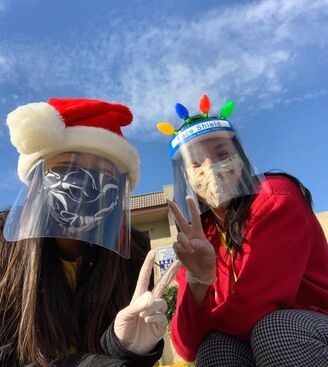
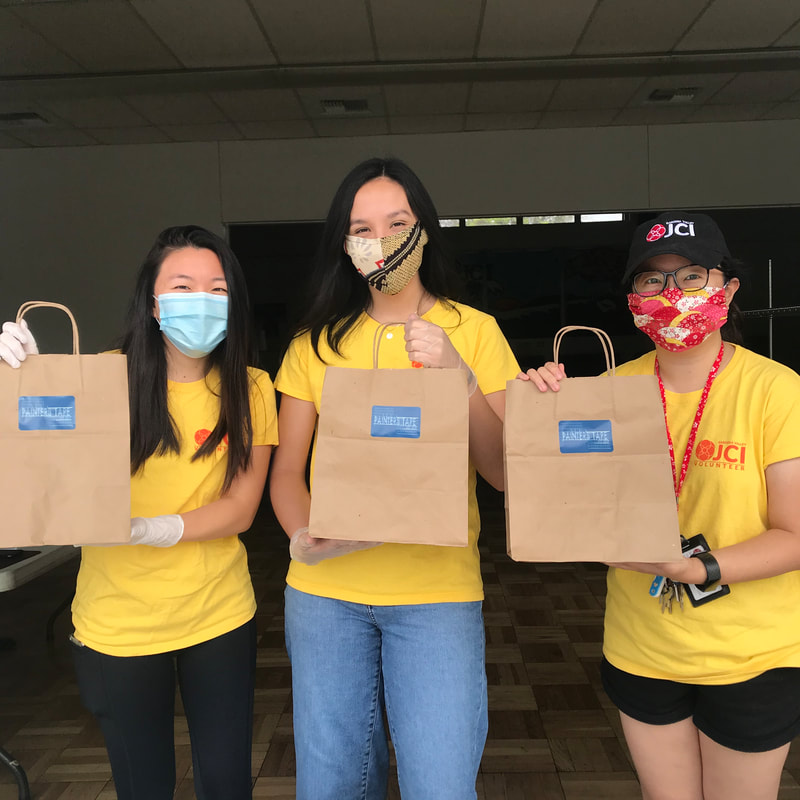
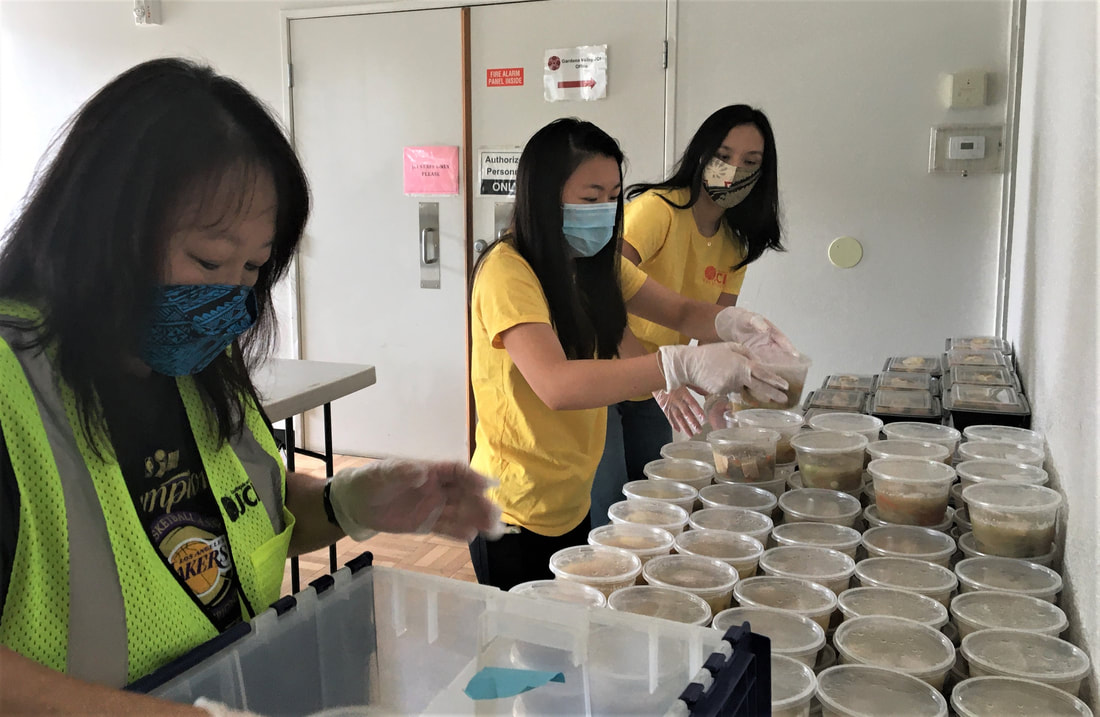
After interning at GVJCI, I now have fond memories of my own! I loved attending some of the online events for children, such as the Tomodachi Baking Workshop series and virtual Oshougatsu celebration. I also liked helping out in person at the monthly LA Regional Food Bank distributions for seniors and the Painter's Tape restaurant fundraiser. Through this internship, I was able to experience firsthand how GVJCI positively impacts the South Bay community and makes people of all ages smile.

Picture
Picture
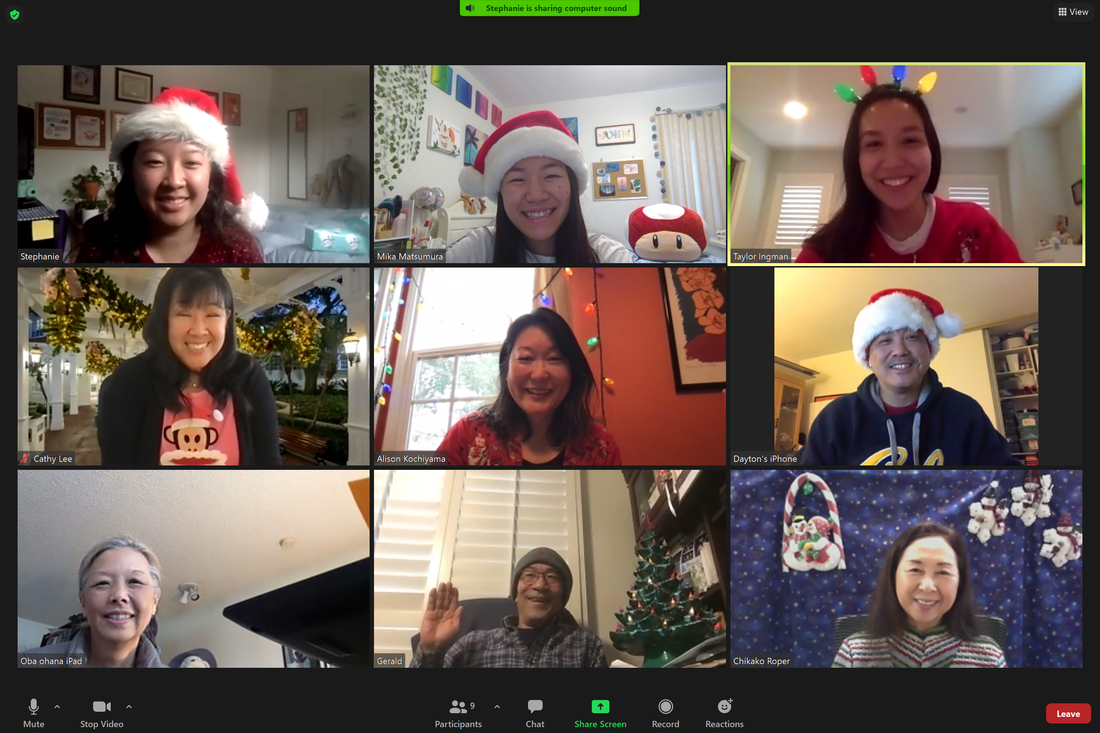
I have met so many lovely people through GVJCI, both staff and volunteers, and I have really enjoyed being more involved in the South Bay Nikkei community. I loved working with and becoming friends with Mika, who was also a Marketing & Social Media Intern-- it was a lot of fun to collaborate on social media posts and attend the monthly food distributions together! The GVJCI is such an important part of the South Bay, and I am so grateful for the opportunity to intern at such a great organization. Interning at GVJCI has allowed me to play a part in preserving Japanese and Japanese-American traditions and culture, which is very important to me.  I am really going to miss interning with GVJCI, but I look forward to staying involved in other ways and would love to attend future events and programs. Thank you GVJCI!
1 Comment

The Amazing Experience of Being a GVJCI Intern!

2/4/2021

0 Comments

 
By: Mika Matsumura, GVJCI Social Media and Marketing Intern 

Picture
Picture

​My name is Mika Matsumura and I am a second year at the California State University of Fullerton. My major is Business Administration with a concentration in Marketing. 2020 was pretty crazy and unpredictable, but I would definitely say that interning at Gardena Valley JCI was the highlight of my year.  I met so many amazing and humble people in the community while volunteering at the food distributions. In addition, I had the opportunity to be alongside the hardworking GVJCI staff and the other intern Taylor, my new friend. Writing the blogs and talking to new people allowed me to learn more about Japanese culture as well as the Nikkei community.
​​I grew up in the North Torrance area and my parents got me involved in all sorts of activities such as SBY basketball, FOR basketball, Sansei baseball, Girl Scouts, Karate, FOR Volleyball, Obon Dancing at Gardena Buddhist Temple, Japanese School, and of course going to the annual Matsuri here at GVJCI.  When I was little, I absolutely loved Matsuri with all of the fun carnival games and delicious food! ​​​Little did I know that I would be a Social Media and Marketing Intern here. 
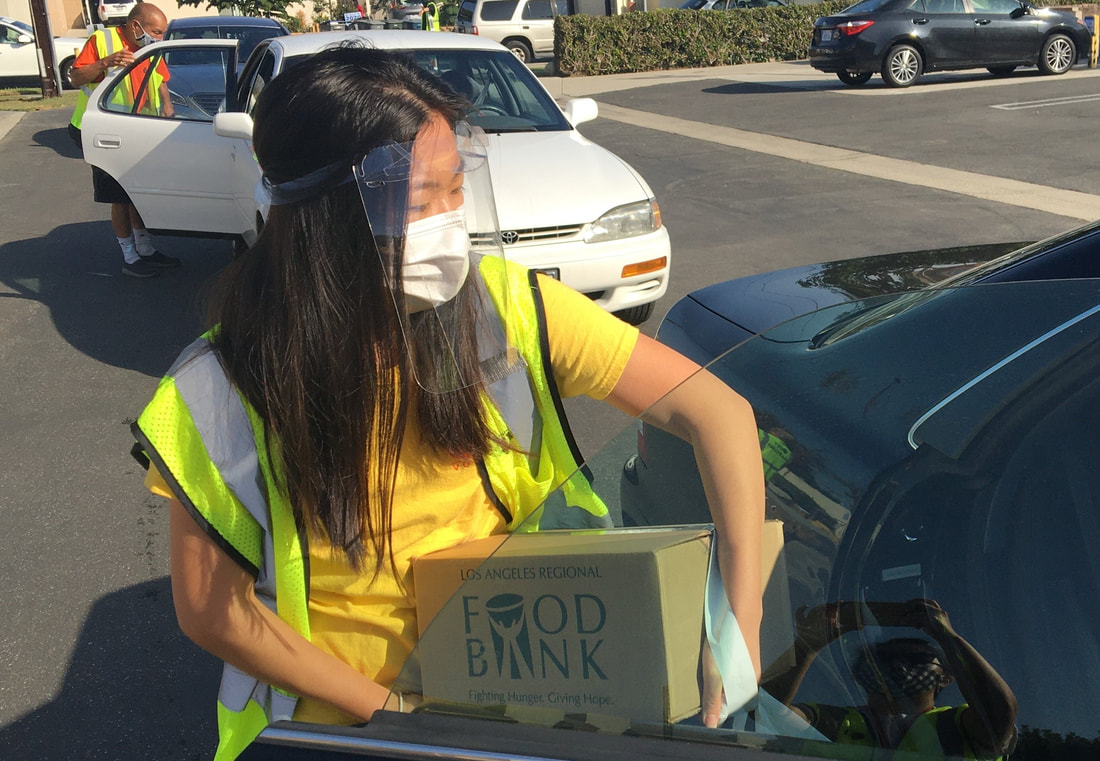
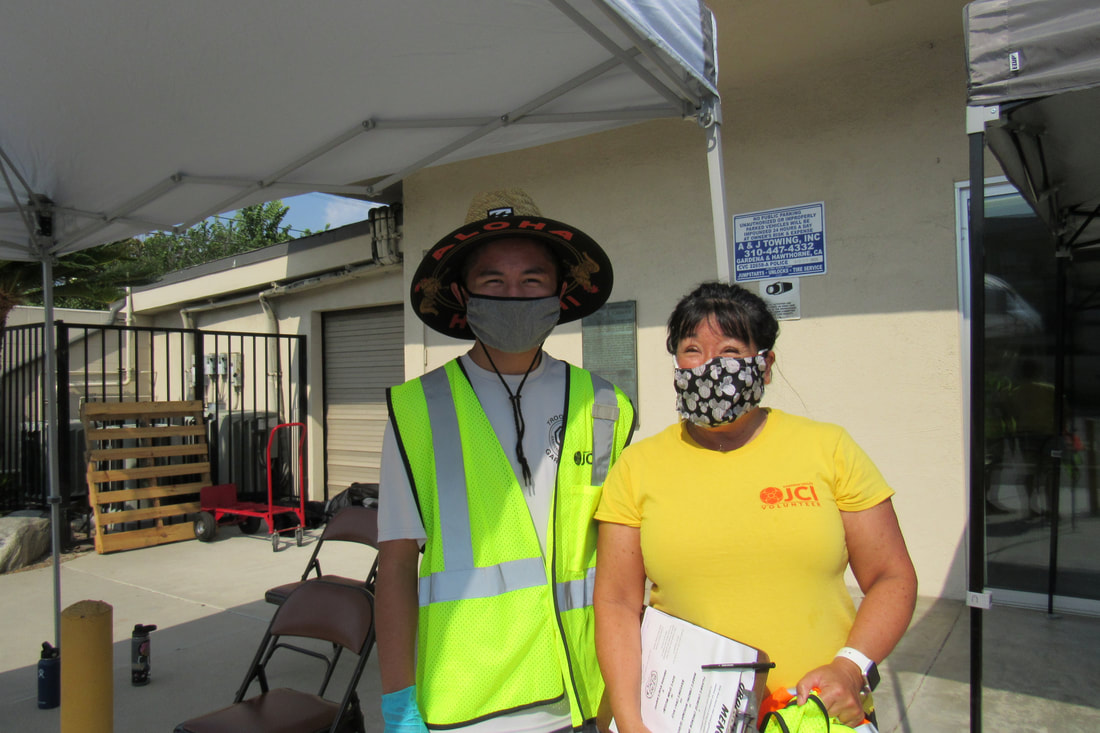
I have made so many unforgettable memories as an intern. Some of my favorite memories were when Taylor and I went to the actual site of GVJCI for either food box distributions or the restaurant drive through fundraiser.  Of course, our weekly zoom meetings were great, but I loved seeing everyone in person even if we were wearing masks. Those interactions where I got to see people smiling with their eyes were the best. It was exciting to meet new people while volunteering! I enjoyed listening to their story of how they first heard about GVJCI, as well as their love for the community. The staff here are the friendliest people and they really treated me like family. Even though my internship is over, you will surely still see me volunteering! Thank you GVJCI for an incredible experience. 
0 Comments

Familiar Flavors in Kabocha Stew

11/23/2020

0 Comments

 
By: Taylor Ingman, GVJCI Marketing and Social Media Intern
Picture
Fall is the perfect time for kabocha and comfort food! This kabocha stew is guaranteed to keep you warm and cozy as the weather starts to cool down. This tasty stew is a great dish to share with close friends and family, especially during fall and winter. I took these pictures the other day when my mom and I made a large batch for our family; we brought some to her parents and brother as well, who all agreed it was oishii (delicious)! I love to make this stew with my mom-- the familiar Japanese flavors in this dish such as dashi and mirin (and of course, kabocha) remind me of eating Japanese food with my family. These classic ingredients will fill your kitchen with the nostalgic scent of a homemade Japanese meal. As my younger brother once said, this recipe smells like our grandparents' kitchen in the best way possible!
Ingredients:
1 small kabocha
3/4 cup water
1/2 cup sake
1/4 cup dashi
3 tbsp brown sugar
3 tbsp soy sauce
2 tbsp mirin
Vegetables (we used carrots, onion, and green beans)
Rib eye steak or prime rib
Harusame (glass) noodles (optional)

Preparation:
Optional: Boil harusame noodles until soft (around 3 minutes). Strain and rinse with cold water, then set aside for later.

Picture
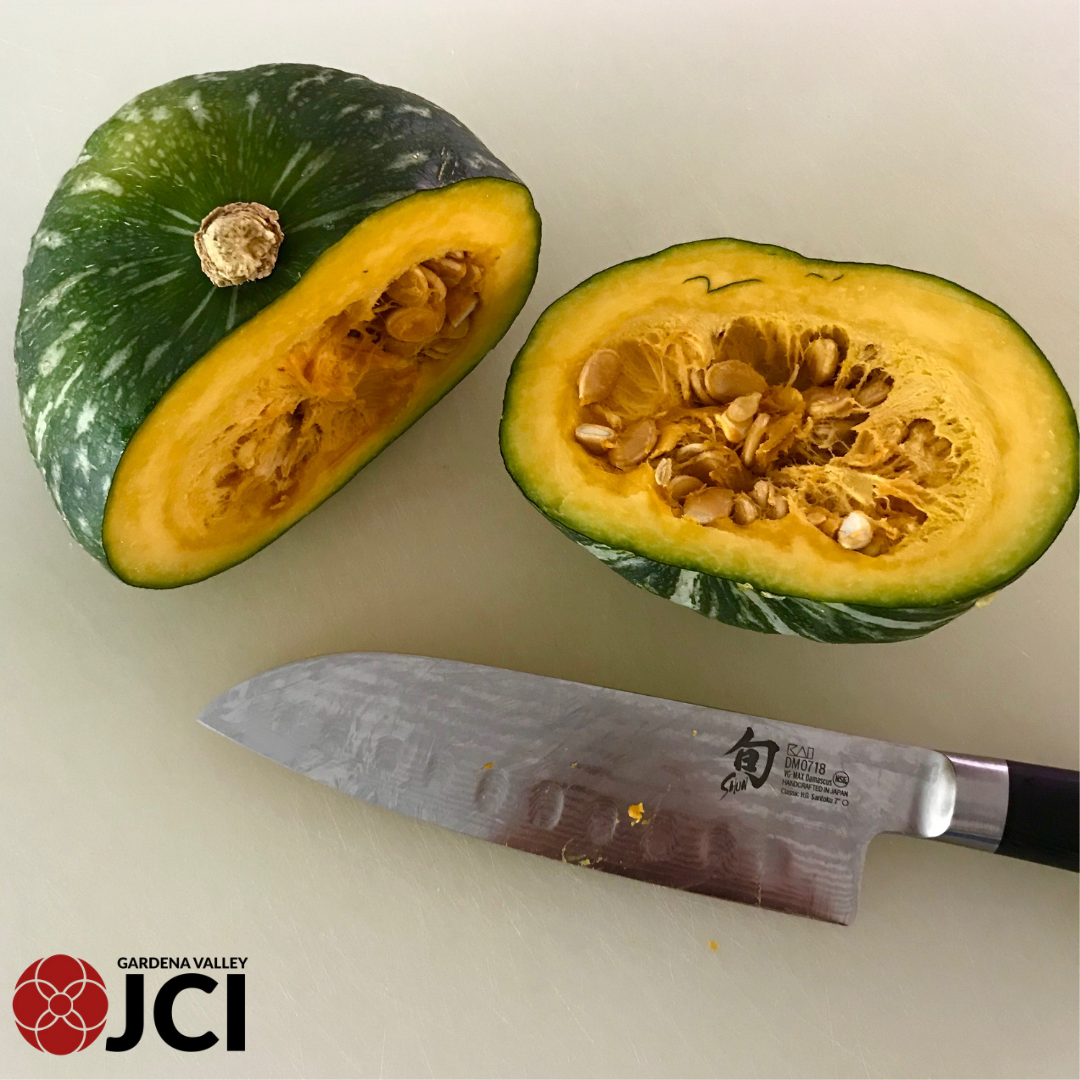
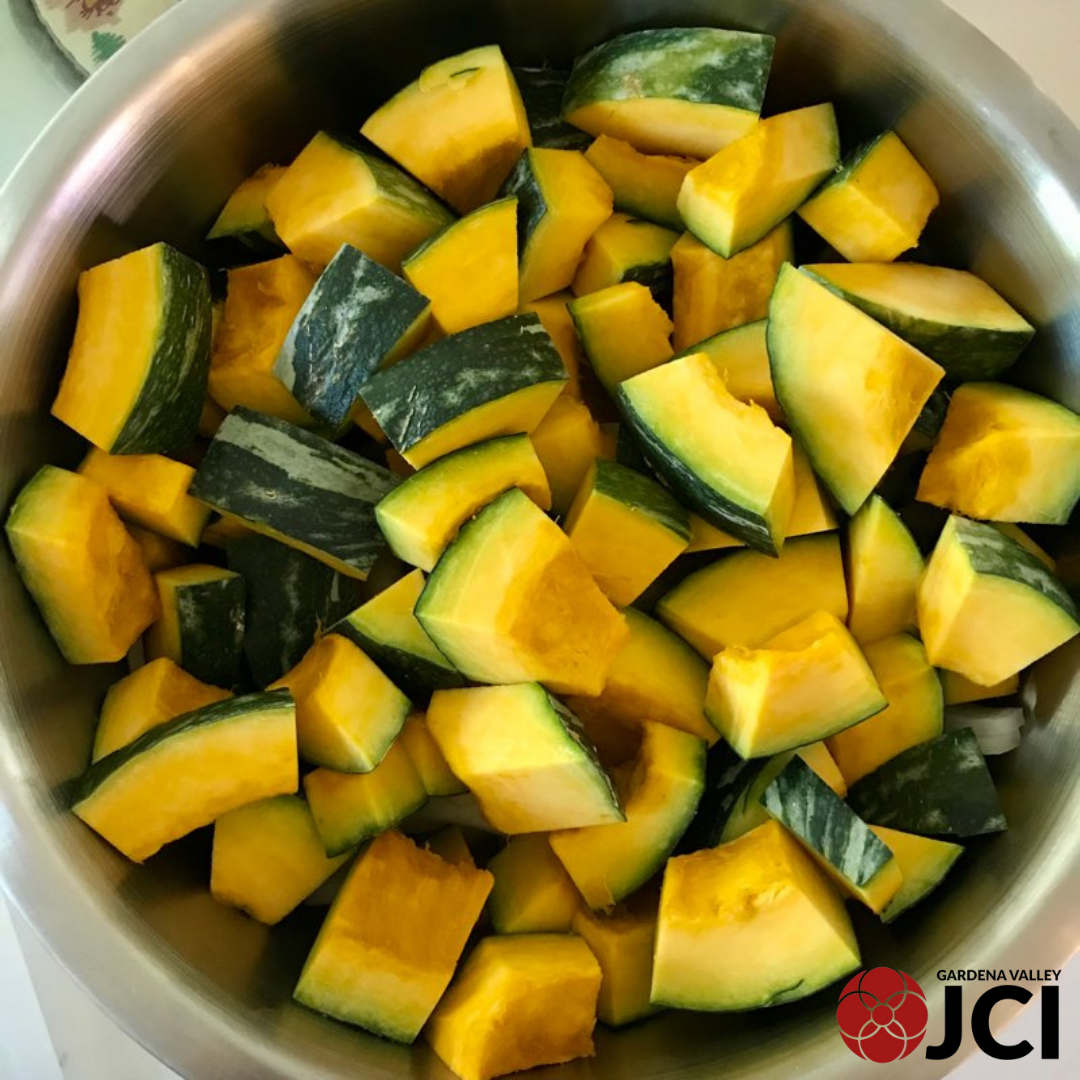
1. Wash and cut kabocha into small chunks, removing insides.
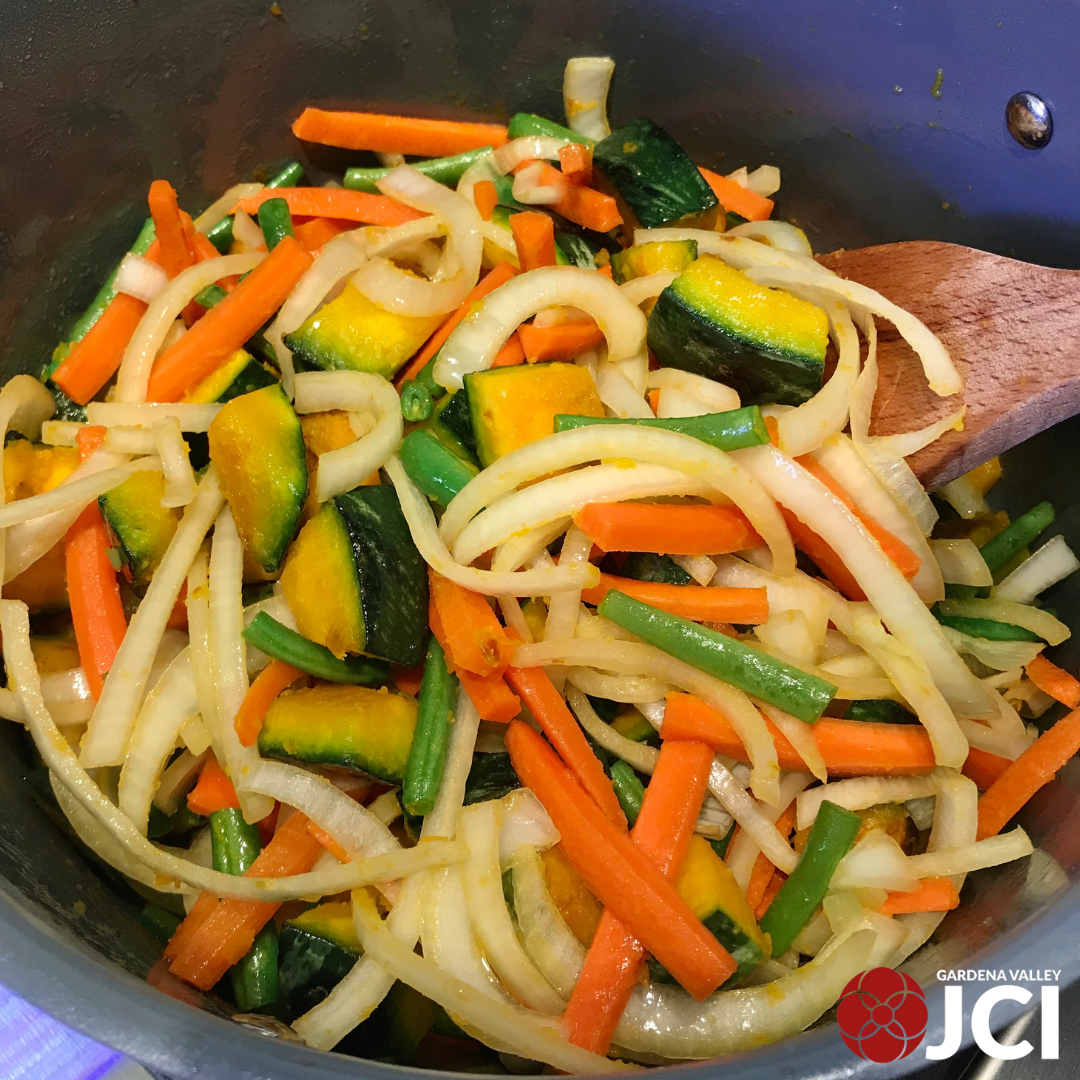
2. Cut green beans and onions into small pieces. Peel carrots and cut into slices.
Picture

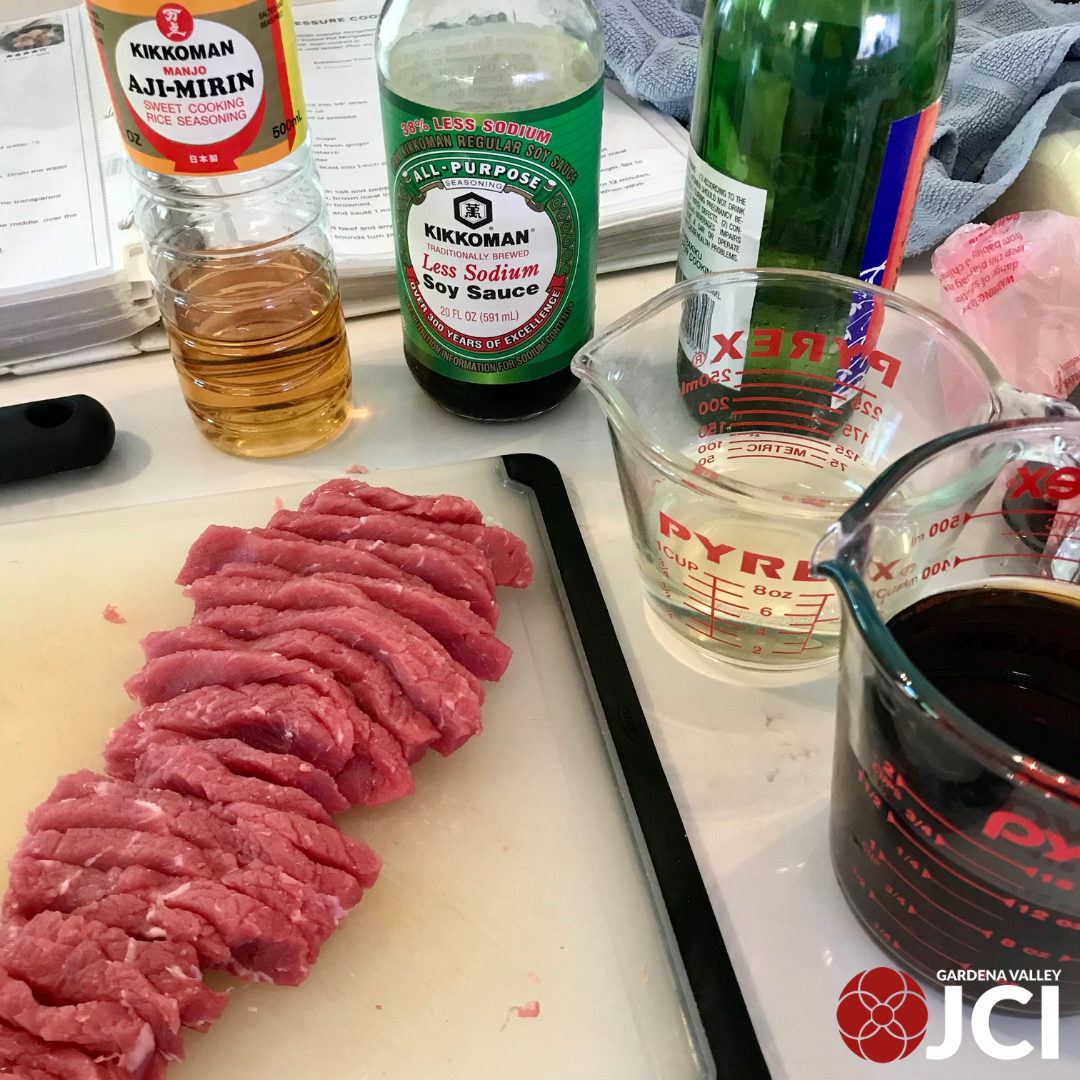
3. Thinly slice the steak (we used rib eye steak).
Picture
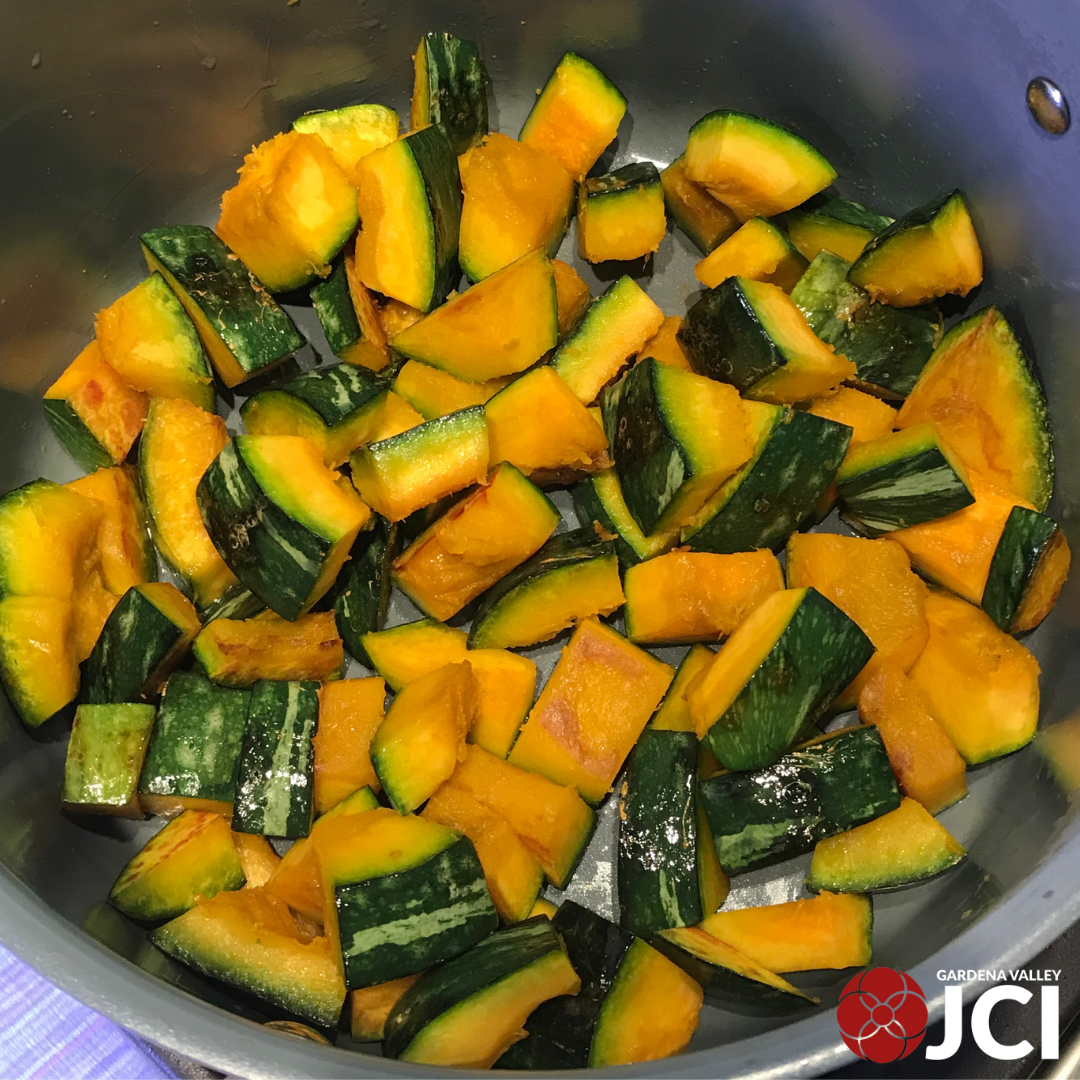
4. Add kabocha to a medium sized pot with vegetable oil. Use enough vegetable oil to cover all the chunks (they should be shiny).
Picture
5. When the kabocha has softened a little, add the rest of the vegetables to the pot. Add more oil to cover the vegetables.
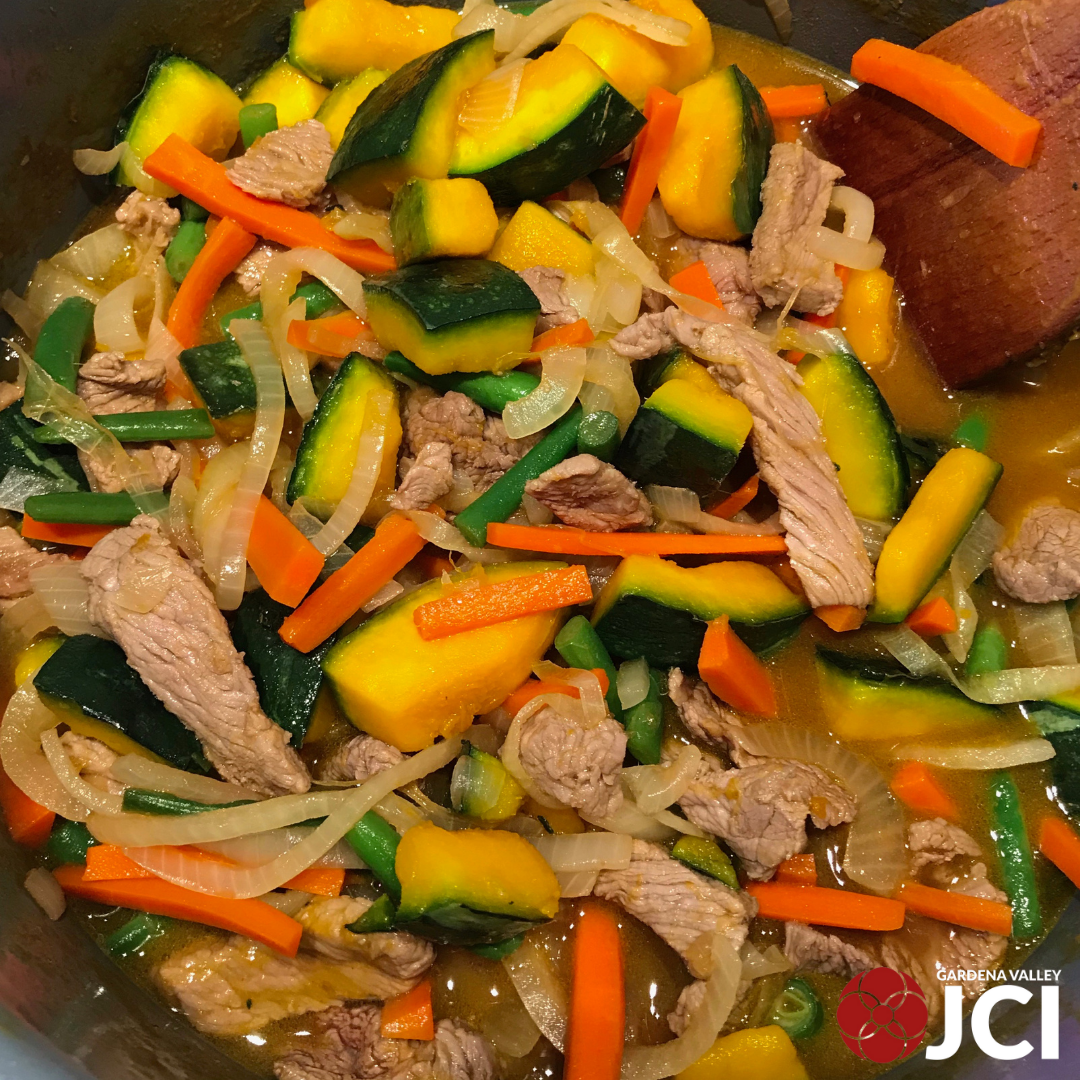
6. Once the vegetables have softened slightly, add the steak to the pot. Cook until the meat has browned.
Picture
7. Add dashi and water to the pot. When the mixture begins to boil, add sake, soy sauce, mirin, and brown sugar.
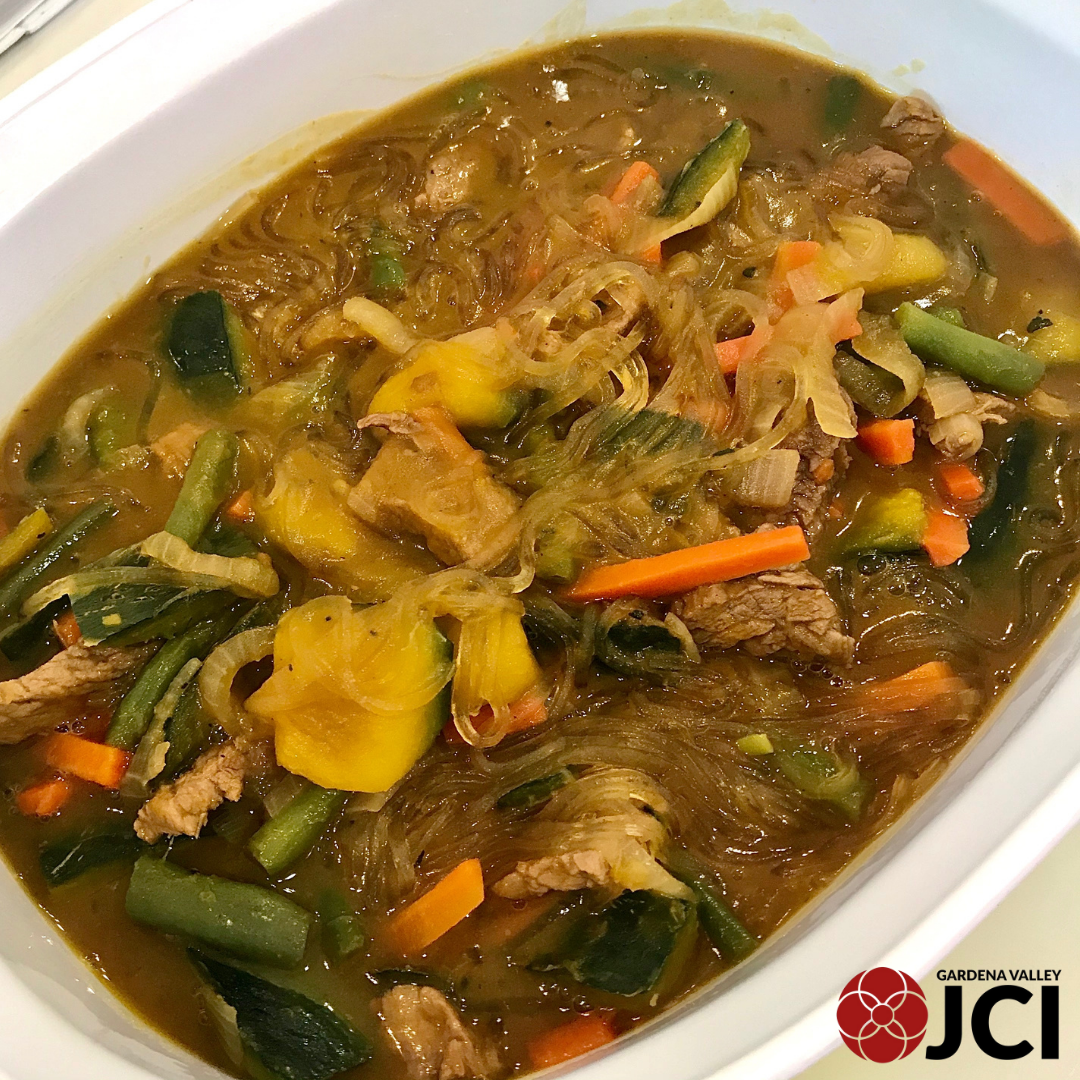
8. Mix thoroughly and add harusame noodles if desired.
9. Serve hot with rice and enjoy! I sometimes like to sprinkle roasted sesame seeds on top. Itadakimasu (let's eat)!
Picture
This recipe is a modified version of the Nikujaga recipe from Chopstick Chronicles, using kabocha instead of potatoes and harusame (glass) noodles instead of konnyaku noodles; the measurements are slightly different as well. The original recipe can be found here: https://bit.ly/3pTOgAj.
0 Comments

My Experience at the GVJCI

9/8/2020

0 Comments

 
By: Michael Suyehiro, Guest Contributor
My name is Michael Suyehiro, a Boy Scout of Troop 683 and volunteer at the GVJCI. I’ve had the wonderful opportunity to help and put together events at the JCI for more than three years now. They’ve allowed me to have a glimpse into my Japanese heritage, something I don’t normally experience in my daily life, as I live in an area predominantly consisting of Caucasians and Korean-Americans. Being here has opened my eyes about the great things I wouldn’t have been able to experience and gave me an opportunity to interact with the people I can relate to in my community. It’s given me the chance to grow as a human being, make new connections, learn about my past, and so much more.

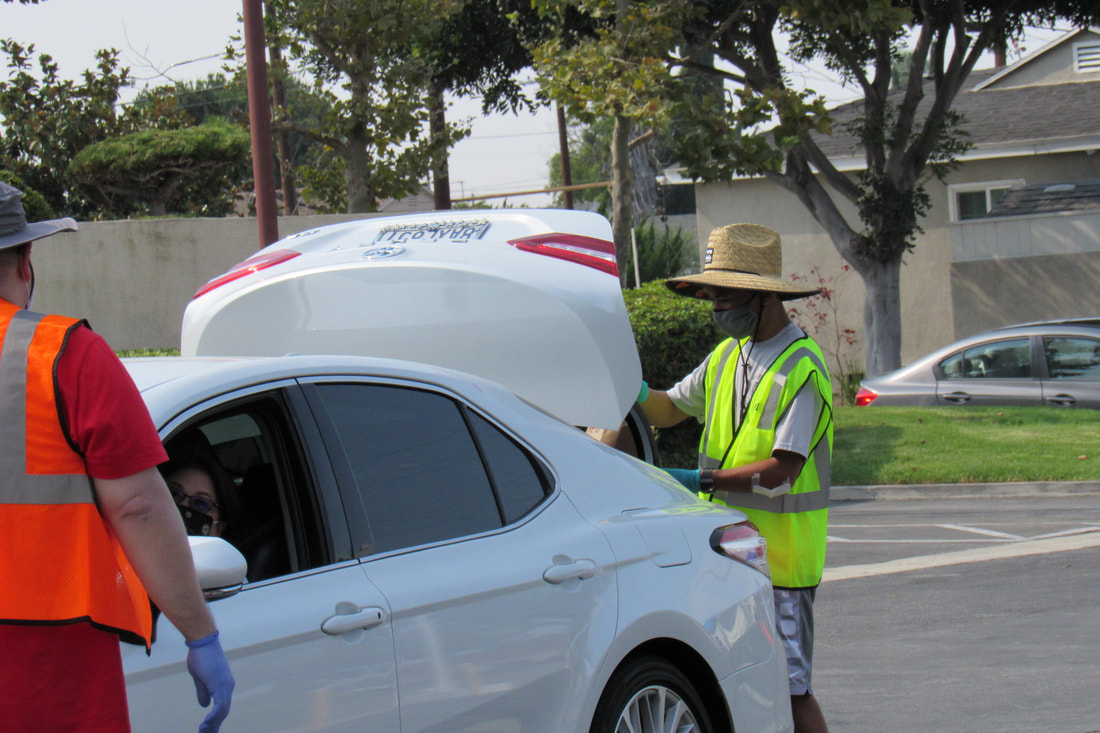
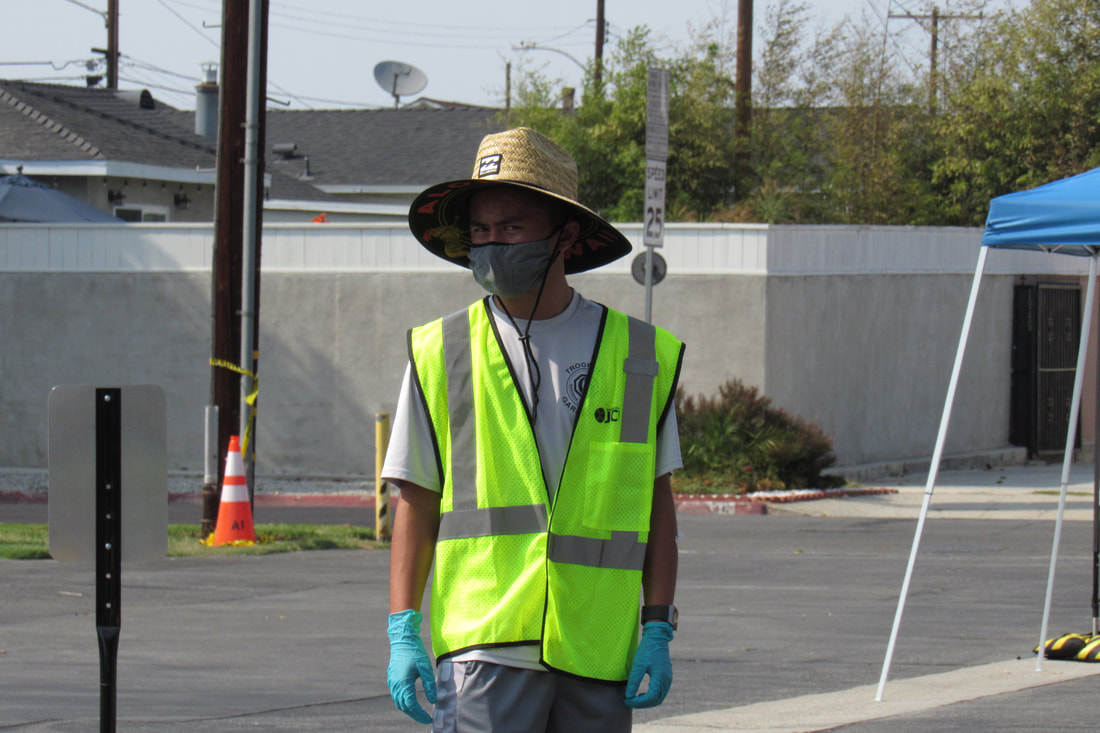
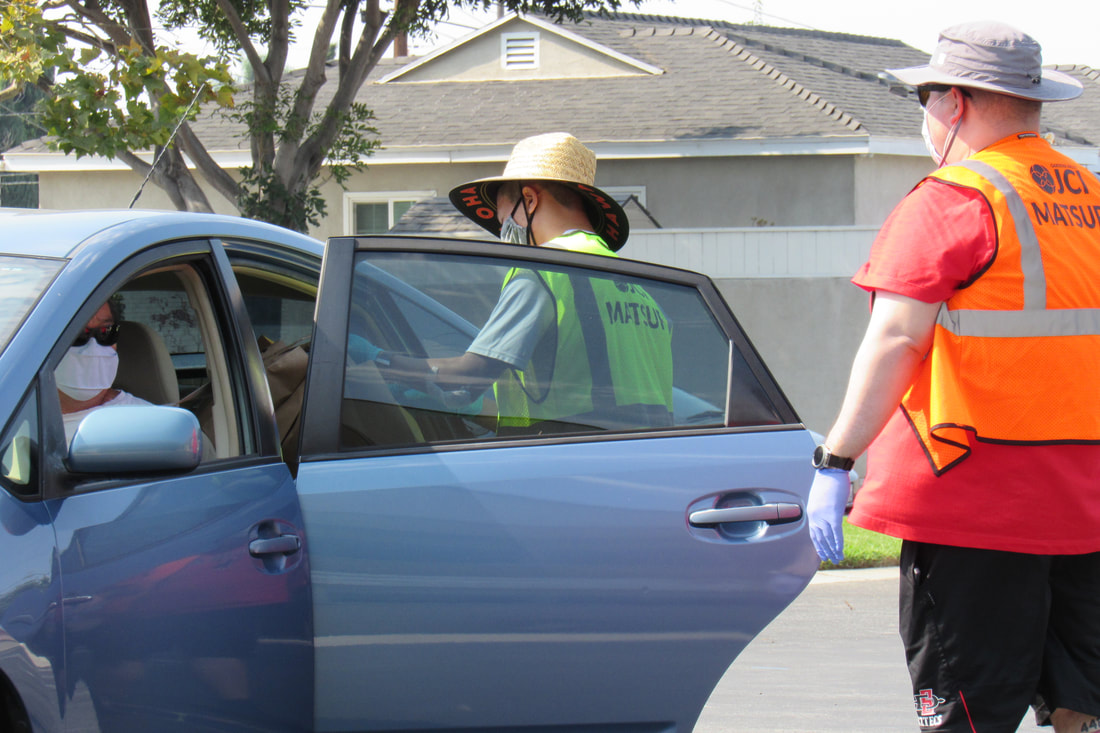
I recently volunteered at the Azay fundraiser on August 22nd. Despite the pandemic, we were determined to hand out the meals promised. It was very relieving to finally get out of the house and socialize a bit. It’s something positive that we all have the ability to still see people and be appreciative of something we almost always take for granted. It’s given me a new view on both the GVJCI and my communities: I’m thankful that they’re here, I’m grateful that we’re still connected, and I’m glad that we can all smile in some way. We all always never notice how much socializing means to us; for the shy, the outgoing, and everyone in between. The JCI isn’t only a place to learn and to practice our skills, it’s a place to socialize and be human. Same with our communities and all of our friends and family: they’re much more important to us than we think. I know that I’m thankful for the experiences I’ve had and will continue to be grateful for all the smiles and projects and fundraisers and festivals to come.
Picture
Picture
But not only am I smiling for my own reasons, it makes me feel good to make other people smile. I’m hoping that what I’m doing will help someone else feel good and relaxed, too. I know that there are people out there who feel the same way, so I want to ask those people to volunteer or even just call or text a friend or family member, take time to make that effort to help and reach out to someone. Of course, be safe, keep others safe, but now more than ever, there are so many people out there that need a reason to smile. We aren’t given the big convenience of being able to run into people out of pure luck, so show someone that you really care about them. This won’t last forever, so look forward to the events and meetings in the future and the people you’ll be able to see again.
​Even if many events can’t be held now or in the immediate future, I’ve attended numerous festivals, Day of Remembrance’s, and fundraisers [and looking forward to more]. I’ve been able to learn about the hardships and the perseverance and the lives of the people before me. The drive to keep going, to keep fighting, to keep providing amidst a deadly pandemic: it’s inspiring. Being able to see what life is like outside of the West, to see that there’s a whole other world, to introduce your own culture to the new world: it intrigues my curiosity. I feel a sense of responsibility to represent my culture, to keep my roots connected to me. Not only have I learned about the past, I can see what we can do to spread the Nikkei experience in the future. And I’m hoping I can continue to contribute to that mission.
Picture
Picture
0 Comments
<<Previous
Forward>>

    Archives

    June 2024
    September 2022
    August 2022
    June 2022
    August 2021
    June 2021
    February 2021
    November 2020
    September 2020
    June 2020
    April 2019
    March 2019
    February 2019
    November 2018
    July 2018
    December 2017
    September 2017
    August 2017
    July 2017
    June 2017
    May 2017
    April 2017
    March 2017
    December 2016

    Categories

    All
    DIY
    Food And Recipes
    JA Culture
    JA History
    Japanese Traditions

    RSS Feed

COME VISIT US!


ABOUT US
BLOG
BOARD & STAFF
CAREERS
JOIN OUR EMAIL LIST
RESOURCES
TESTIMONIES
​


UPCOMING EVENTS & PROGRAMS
JAPANESE LANGUAGE SCHOOL
​
RESERVE OUR FACILITIES
​VOLUNTEER

​
Would you like to get in contact with us? Donate, volunteer, or just have an idea for  an event/program?  Leave us a message, and we will try to get back to you as soon as possible!
連絡を取り合いませんか? 寄付、ボランティア、またはイベントやプログラムの提案? 
​メッセージを残して下さい。できるだけ迅速にご連絡します。
CONTACT US
[email protected]    
(310) 324-6611     
Gardena Valley Japanese Cultural Institute
​1964 W. 162nd Street, Gardena, CA 90247 
Picture
​A space to engage, share, and embrace the Nikkei experience and culture. 日系の経験と文化に関わり、共有し、受け入れる空間
Proudly powered by Weebly